
Trigger warning: This article features illustrations depicting self-injury acts.
I was walking in the street yesterday, and spotted a small Kuromi figure on the ground. Someone must have accidently lost it. The sight of this cute, happy face made me smile: some light-hearted positivity is nice to see, especially in dark times. Perhaps this is why kawaii aesthetics has become so popular in the last decades, and spread far beyond Japan. But behind the apparent cuteness of people who enjoy kawaii aesthetics, life isn’t always a bed of roses.
With its many pastel colored t-shirts and accessories featuring manga characters and cute animals, at first glance, Ryan’s online shop looks typically kawaii and peaceful. Though it doesn’t take long to realize something is off. Her characters have bandages and self-injury scars on their arms, they cut with razors, and they cry.
Japanese artist Ryan belongs to a subgenre of kawaii aesthetic called Yami Kawaii, which translates to “sick cute”. The style was born to serve as a reminder that appearing cute doesn’t necessarily equate to being okay, and blends kawaii elements with mental illness imagery, such as pills, syringes, razor blades, nooses, and scars.
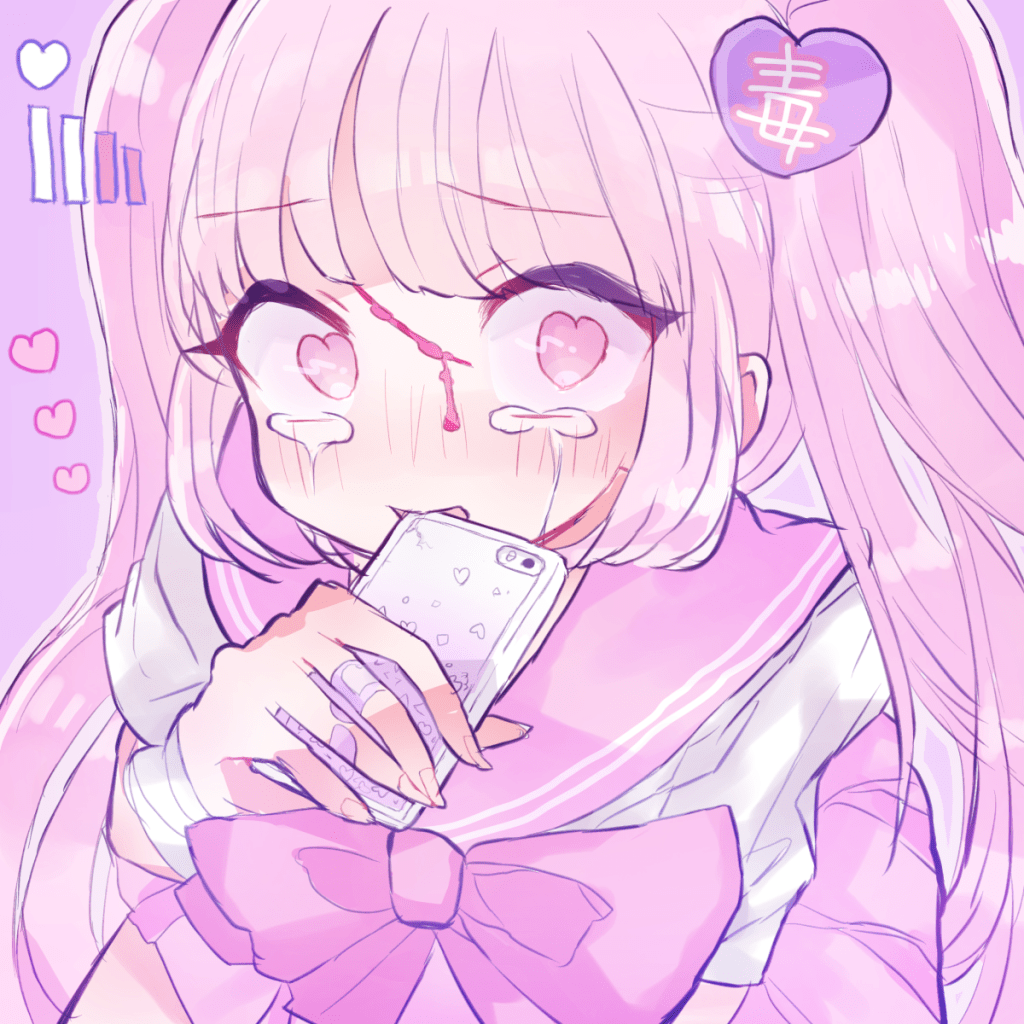
Like many Yami Kawaii artists, Ryan’s use of mental illness elements in art doesn’t stem purely from her imagination, but instead has been inspired by her own experience. “The inspiration is my negative emotions such as my suffering and despair. I have bipolar disorder and have been struggling with it for 19 years since I was 12 years old”, she explains. “I have self-harmed for many years and have once cut myself deep enough to expose muscle.”
Mental illness is extremely stigmatized in Japan, which makes communication about it difficult. “The experience cannot be easily expressed in words”, regrets Ryan. But far from remaining voiceless, she found a way to convey her emotions through art. “My art is an outpouring of emotional expression. I transform what I feel daily, emotions that I couldn’t express, pain, passion, and all that into my art. It transforms the pain in my heart into something positive.”
In that regard, art and self-injury are similar, as both can be a way to express what is too difficult to convey through words, and art’s therapeutic power has been made evident through art therapy for example. Given art can serve the same functions as self-injury, it can become a healthier alternative to it. “Sometimes I create art instead of actually doing self-harm”, remarks Ryan. “While real-life self-harm is full of suffering, self-harm in my art saves me.” Art is also a way to touch upon others, open up, and build a sense of community, to show that those who suffer from mental health issues are not alone. “Through Yami Kawaii arts, we reconsider our feelings, share them with others, and heal our loneliness”, sums up Ryan, who has been inspired by other Yami Kawaii artists to create her own illustrations. “It started when I saw the wonderful works of other creators.”
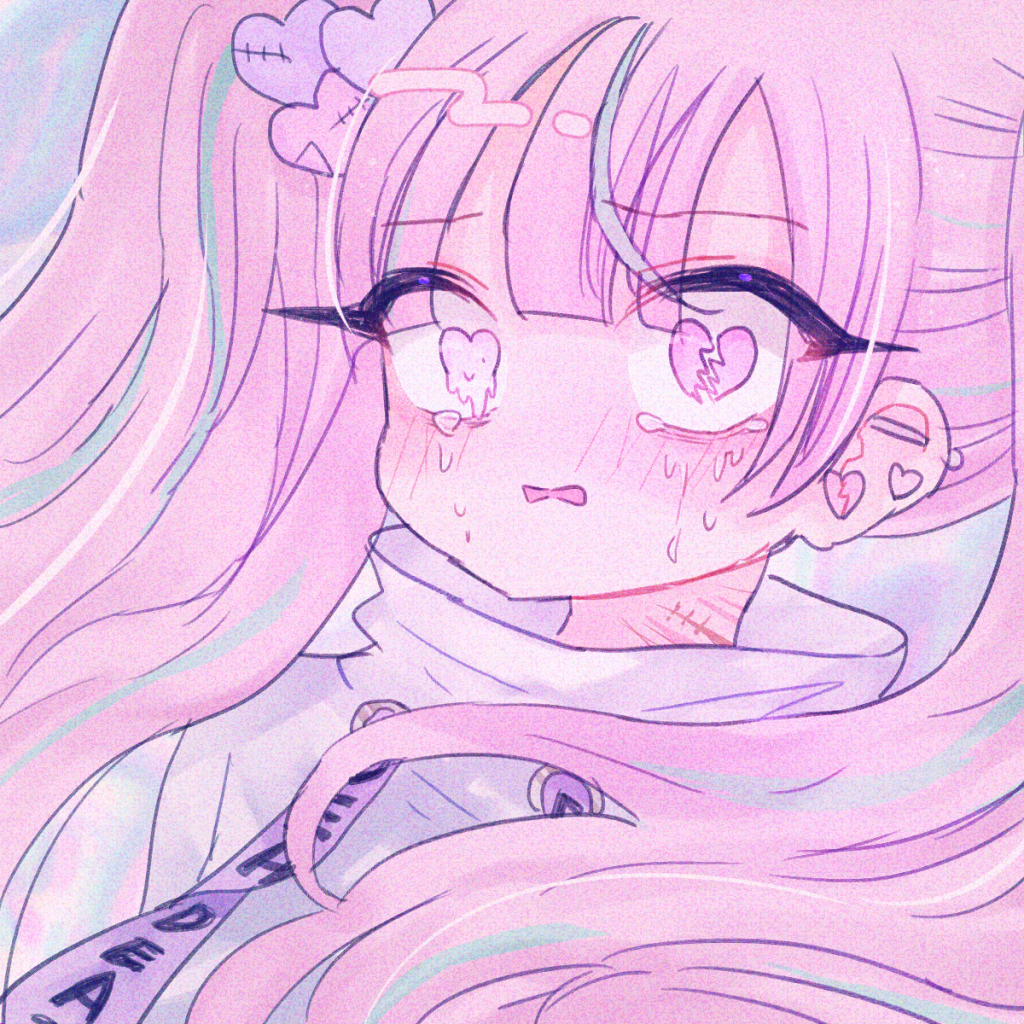
Many people outside the community may be shocked by the gory depictions of self-injuries, or the references to suicide that are frequently featured in Yami Kawaii art and fashion. Ryan’s tumblr page, for example, displays a “Mature Content” warning sign. Due to its attractive cute aesthetic, Yami Kawaii has been frequently accused of glamorizing self-injury and mental illness. When asked about such criticisms, Ryan admits to having mixed feelings. “In a sense that’s true. Because it turns negative emotions into positive ones”, she admits, before encouraging people to see beyond the shocking elements in artistic Yami Kawaii. “I disagree with the opinion that ‘Yami Kawaii is wrong and that it must be regulated because it glorifies self-harm and mental illness’. We should not get caught up in the surface of Yami Kawaii, but should pay attention to the deep meaning hidden beneath.”
Indeed, beyond its mere aesthetic, Yami Kawaii has a goal, and graphic elements are not used purposelessly. Yami Kawaii is not only a form of expression, it’s also a means of activism. The style uses cuteness to “sugar-coat” sensitive topics, it uses aesthetic codes that the public knows and feel comfortable with to make mental health more accessible.
“Artistic Yami Kawaii has the potential to gain visibility”, believes Ryan. For many people who suffer from mental health issues, making Yami Kawaii illustrations or displaying the style on t-shirts or through accessories is a means to reappropriate their struggles, and make them visible in a country where they are expected to be kept hidden. And while the subgenre remains rare in Japan, its increasing visibility suggests that a considerable part of the population is sympathetic to the cause. “Although Yami Kawaii is a subculture in Japan, it has a certain level of popularity, and I feel that it is expanding with the times”.
What becomes popular frequently becomes heavily commercialized. I ask Ryan whether she believes Yami Kawaii’s popularity could risk mental health becoming a consumeristic strategy. “Yami Kawaii is becoming a marketing tool in some aspects”, she admits. “However, in that case, grotesque expressions such as blood are not suitable and must be moderately suppressed.” So while graphic elements are not necessarily bad nor glamorize mental illness, the intention behind an illustration matters.
One controversy comes to my mind here, involving illustrator Bisuko Ezaki, whose character Menhera-chan uses wrist cutting to turn into a magical girl and fight evil spirits, along with other “wrist cutting warriors”. Ezaki created Menhera-chan between high school and college, to cope with the stress and depression exams were causing him. The character became extremely profitable and commercialized. In 2014, in collaboration with jewelry brand Conpeitou, Ezaki released a bracelet featuring the illustration of a cut wrist. The product was accused of being disrespectful to people who suffer from self-injury, and of treating mental illness as a fashion accessory. The bracelet was eventually discontinued due to the backlash.
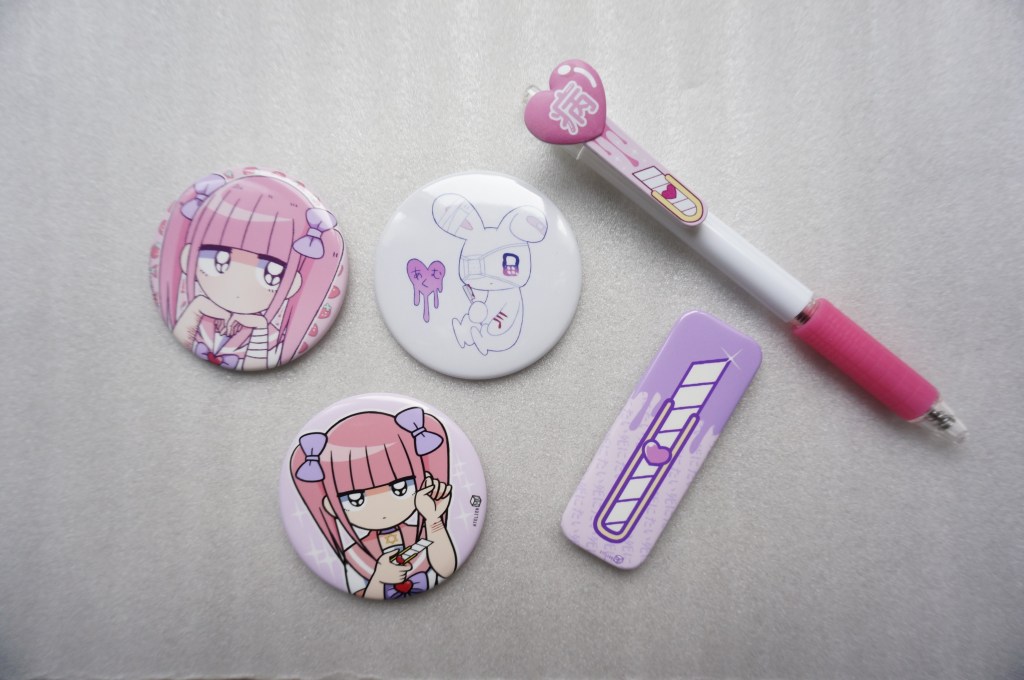
Whether to simply express oneself through Yami Kawaii fashion and art, or using it to spread awareness is every individual’s choice. “In Japan, Menhera fashion [mental health related fashion] is spreading. The theme of Yami Kawaii is both shallow and deep. Yami Kawaii is sometimes enjoyed as fashion, and at other times it helps us peer into the abyss of the human spirit.”
“Both shallow and deep”, seems to sum up perfectly how mental health should be treated in societies: a serious topic that can be talked about openly. Of course, we still have work to do, as judgment and misunderstanding prevails, but Yami Kawaii shows that activism can take many forms and flourish even in countries such as Japan where mental health is still heavily stigmatized.
For more information about Ryan’s work, check the links below.
Instagram: https://www.instagram.com/ryan_nightmare/
Online shop: https://akumu-h.booth.pm/
Tumblr accounts: https://ryanlab.tumblr.com/ and https://akumu-byouin.tumblr.com/
 Exploring self-harm