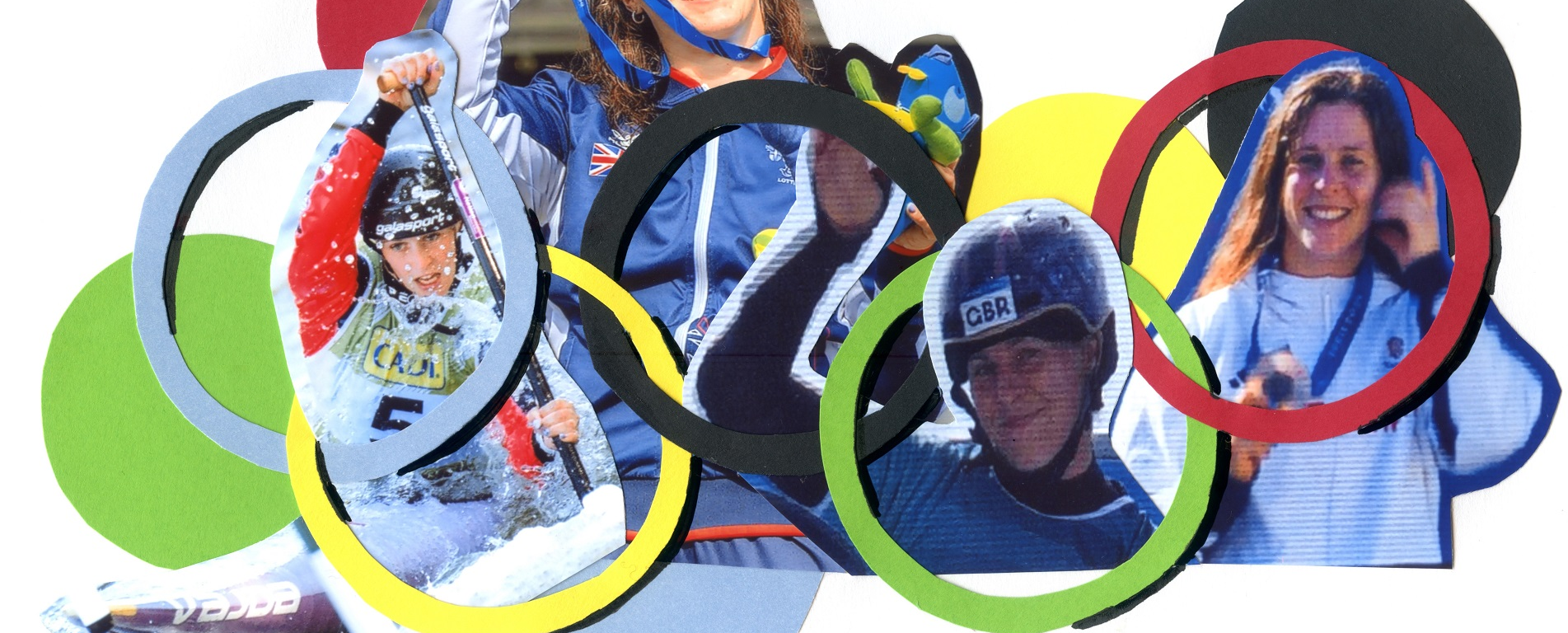
On August 4th and 5th, I was lucky enough to see the heats, quarter-final, semi-finals and final of the Kayak Cross 2024 Olympic competition at Vaires-sur-Marne, in France. It was the Olympic debut for Kayak Cross which sees four kayakers race through the rapid. They must bypass buoys and frequently bump into one another to overtake the other competitors.
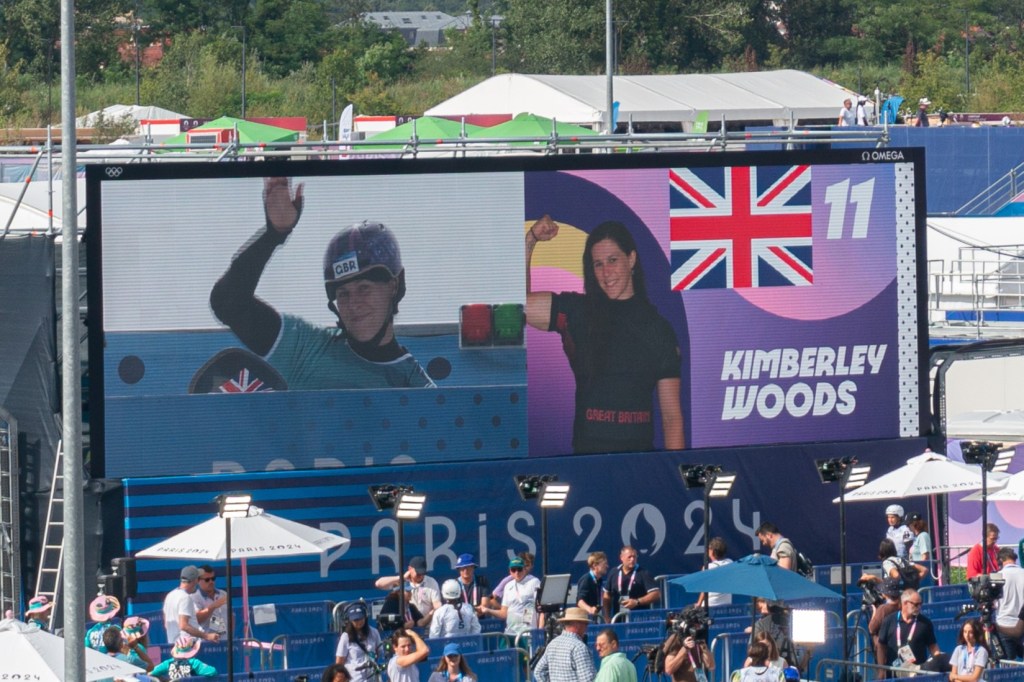
Under the burning sun, the crowd was wild, we were 12 000 people supporting athletes from all over the world. One of the athletes was not unknown to me – she was one who, like so many, struggled with mental health issues and self-injury. Kimberley Woods is a British canoeist, and a very talented one. She’s been World Champion multiple times and won two bronze medals at the Paris 2024 Olympics for women’s K1 and Kayak Cross.
Unfortunately her case is not a rare one, and other athletes have engaged in self-injury in the past. Athletes Kelly Holmes, Amanda Beard, Nick Kyrgios, Rebekah Wilson and Elise Christie openly talked about it and shared their stories of recovery, but no doubt others still struggle silently. Many athletes suffer from poor mental health and while some resort to self-injury to cope, others turn to different coping mechanisms such as alcohol, or manifest their suffering through disorders like depression or eating disorders1. It’s not surprising athletes can suffer from body image issues, given the importance put on the body in sports, and the sometimes revealing outfits imposed on athletes, which can be particularly stressful for those who have self-injury scars. Looking at the names mentioned above, most athletes who engage in self-injury report common themes: pressure to succeed, the issue with being defined by sports and athletic performance, and being seen as strong and muscular, which makes the stigma about mental health even stronger. Such heavy stress can take a toll on athletes’ mental health, even those who compete at a professional level.
Sport related injuries can also be very hard for athletes to accept. This is what led Kimberley Woods to self-injure, as in 2015 an anterior cruciate ligament forced her to stop her training. Until then, sports had been her way to cope with mental health issues, and she was left without any alternative but self-injury. The parallel between sports and self-injury is not unusual, and excessive exercising or overtraining can be a form of self-harm for some athletes, a way to feel something other than dullness for example2. From a biological standpoint, this makes sense. Physical exercise releases beta-endorphin, a hormone which promotes happiness and reduces negative emotions3, and research has shown that sports reduce depression, anxiety, and self-injury4. We also know that while sports boost self-esteem and social connection3, people who self-injure have lower self-esteem and feel less socially supported than those who don’t self-injure3. Social connection was the key to recovery for Kimberley Woods. Both as a teenager, when she was bullied for being more muscular than most girls, and then after her injury when she was engaging in cutting, she kept her suffering to herself. She would cut on her arm, and then on her thighs to make sure no-one could see her injuries. But after her coach learned that she was cutting, she opened up to him5 and sought treatment.
Kimberley Woods’ journey is a story of resilience. After a disappointing loss at the 2020 Tokyo Olympics, she came back to the Olympic competition 4 years later, stronger than ever, where she won two bronze medals. She showed that both with mental health, and in sports, the key is to never give up. Even when she got tangled on the 8th buoy during the Kayak Cross’s final, she didn’t give up.
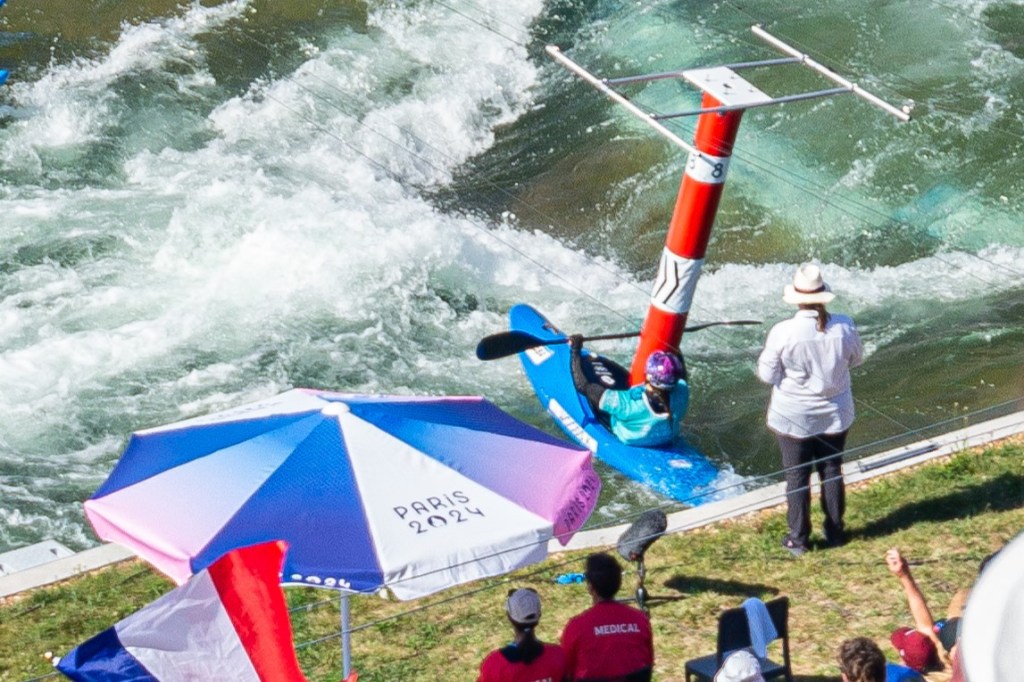
That moment had made me give up all hopes to see her stand on the podium, with a medal around her neck. But now I see it under a different light. Sure, this incident cost her a silver medal – she was second at the time, after having led the race for a while. But she kept struggling and trying, despite other competitors getting in front of her. She didn’t give up, nor took any short cuts. She was patient, did not rush to the finishing line, and passed the obstacle according to the rules. Till the very end she fought, and as she was last to cross the finishing line, I assume little did she know that the athlete who finished before her had received a penalty, which enabled her to claim bronze.

Kimberley Woods is an inspiration for young people who suffer from mental health issues. She, along with a growing number of professional athletes, advocate for mental health awareness. Her life shows that self-injury doesn’t prevent you from achieving great things, and that you can be defined by much more than self-injury. You only need to keep hope and try, despite failure and relapse, and always stay focused on your goals.
References
[1] Lash, M. I. (2013). The relationship between non-suicidal self-injury and disordered eating in female collegiate athletes. NMU Master’s Thesis. https://commons.nmu.edu/cgi/viewcontent.cgi?article=1471&context=theses
[2] Tyburski, L. (2023). Life Journeys: Can exercise be a form of self-harm? SANE. https://www.sane.org.uk/campaigning-media/news-and-comment/life-journeys-can-exercise-be-a-form-of-self-harm
[3] Yu, H., Mu, Q., & Li, K. (2023). Effects of physical exercise on non-suicidal self-injury in adolescents: the chain mediating role of perceived social support and self-concept. frontiers in Psychiatry, 14. https://doi.org/10.3389%2Ffpsyt.2023.1201863
[4] Latina, D., Jaf, D., Alberti, R., & Tilton-Weaver, L. (2022). Can participation in organized sports help adolescents refrain from self-harm? An analysis of underlying mechanisms. Psychology of Sport and Exercise, 59. https://doi.org/10.1016/j.psychsport.2022.102133
[5] McRae, D. (2024, March 4). ‘My only outlet was self-harming’: canoeist Kimberley Woods on taming depression and targeting Paris gold. The Guardian. https://www.theguardian.com/sport/2024/mar/04/kimberley-woods-canoeing-taming-depression-targeting-paris-olympics-gold
 Exploring self-harm