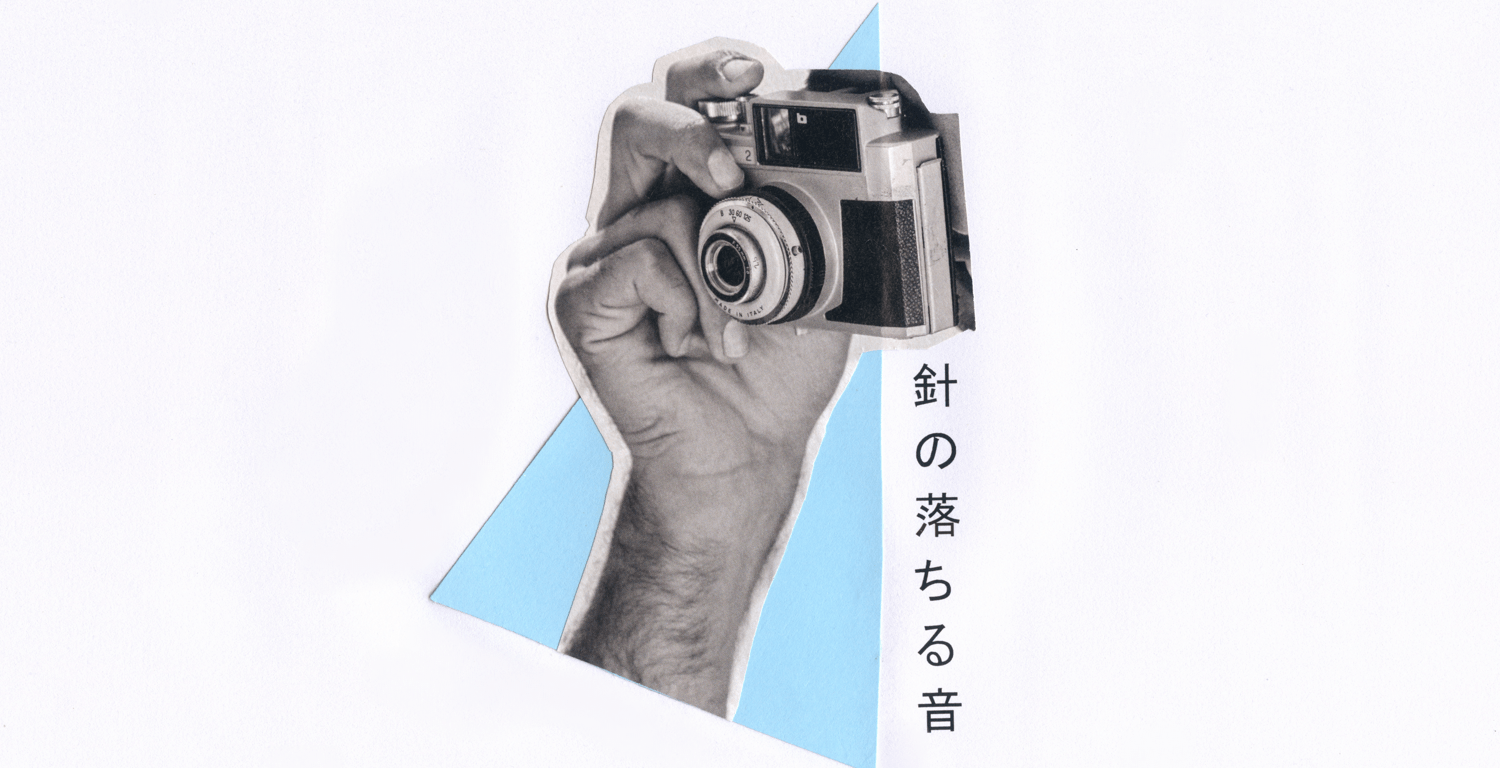
For many, self-injury is a secret and stigmatized practice, though Lin Shihyen made it her goal to bring the act to light. Originally from Taiwan but based in Japan, she released her photography book Hear A Pin Drop this year which portrays those who have self-injured.

Lin recruited her models from an online mental health community, explaining in detail her view on self-harm and the type of photographs she was trying to achieve. People who were interested contacted her but, even if they understood the projects, many felt anxious about it. “I usually talk with them for about 30 minutes to an hour before shooting. It’s more like talking with a friend instead of an interview. Of course I ask some questions about their self-harm experience but it is also fine if they don’t want to talk about it. It’s more about knowing each other and relaxing before the shoot. I think we’re usually both a little bit nervous before discussing it, but not uncomfortable.” The models were also offered the choice to show or cover their face. “Usually I let people choose the place where we shoot, the place where they can feel totally relaxed”, added Lin. Her 14-year experience with self-injury, depression, and anxiety also helped her better understand the people she photographed. “I consider that everyone has different reasons to start self-harming, and have different feelings during the process”, she explained. “I couldn’t say I felt the same way as everyone I photographed but my experience helped me to imagine and accept these different situations instead of being in denial.”
Lin realized a large part of works surrounding self-injury focused on the injury itself, such as scars. But she did not want to show the shocking and bloody side of self-injury, she wanted to show the individuals who suffer from it. Only scars are shown, but they are rarely the focus point. Shihyen believes that society’s view on self-injury can change more easily if stereotypes are not emphasized and if photographs are not shocking. Her goal was not to scare but to show. “Some people were shocked, especially with the photobook because I avoided most of the close-up images in the exhibition”, she admits. “Some people ask me a lot of questions trying to understand more about self-harm. Others were touched or related to it, or were reminded of their hard experience even though they have never self-harmed. Some people change the way they see self-harm, but some people do not, and it makes them feel uncomfortable.”
Interestingly, society’s views and reactions on self-injury in Japan differs from those in Europe and North America. When asked about this topic, Lin admitted it was a difficult question. “I can only talk about my own experience or observation. I think self-harm is kind of a special culture in Japan. Self-harm appears in mangas or as a fashion icon (yami-kawaii and menhera characters). Actually some people I photographed know and start to try self-harm as in manga. People usually don’t talk or ask about it when they notice their friend or classmate self-harms in Japan. I think it’s because they don’t want to meddle with other people, and because it’s not that rare in Japan. In Taiwan most of the people think the body was given by parents and so you shouldn’t harm yourself (even with piercing or tattoo) because of the confucian culture. In my experience, people are shocked and ask you to stop the behavior a lot even if you aren’t close.”
But the photographs don’t exclusively deal with self-injury, they send a more universal message about suffering and mental health issues. “I photographed people who have experience with self-harming, but I’m trying to talk about pain as a common feeling or experience, and showing the strength and fragility. I don’t hope the viewers look for “rational” reasons as to why the people I photographed self-harmed, or sympathize with them as if they’re a specific kind of people who live in misery.” Her photographs send a message of hope, and fight the misconception that self-injury is a suicidal venture. In her call for models’ contributions, she explained that self-harm was for her a way to choose life when confronted with suffering.
But Lin’s photographs don’t only target society, they also reassure people who self-injure that all forms of self-injury are legitimate. From mild cuts to severe scarring, self-injury is shown through diversity, even though cutting is the only method represented, perhaps because it is the most common form in Japan. It comforts people who self-injure by showing them they are not alone. “Some of them feel less lonely when they see the other people in the book, and some of them feel better that their scars are turned into something useful or help others. Some of them feel they have been positively recognized for who they are. I appreciate that most of the feedback was positive.”
Lin’s book is refreshing in that it shows people who did not conceal their scars, and proves that there is beauty in imperfection.
For more about Lin Shihyen’s work, check her website.
You can order the book on the publisher’s website or Shashasha, a Japanese book shop specialized in art and photography.
 Exploring self-harm